"Every adventure starts with a first step." — Cheshire Cat, Alice in Wonderland
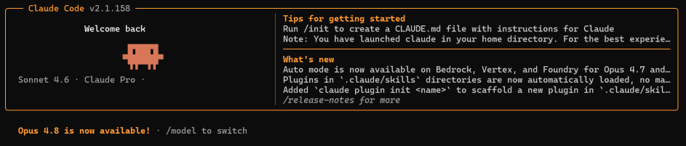
And so began my adventure of building a website in a Terminal window. Not exactly the environment I imagined myself in at this stage of life.
For most of my career, I worked in operations — structured environments, governance, process optimisation, stakeholder management. I was comfortable in rooms discussing strategy, delivery models, escalations, and execution.
I was used to working with AI through a chat interface. This was different — a black terminal screen, commands I barely understood, error messages appearing faster than I could look them up.
It felt strangely uncomfortable. And unfamiliar.
Because underneath the technical learning was something else entirely: learning how to become a beginner again.
The Romantic Version vs Reality
The internet makes AI-assisted coding look deceptively smooth. What people rarely show are the dependency conflicts, broken installs, configuration errors, deployment failures, and long stretches of not knowing what you are doing.
These were some of mine.
I started with a single website brief, assuming that if I described what I wanted clearly enough, Claude Code would simply build it. It didn't.
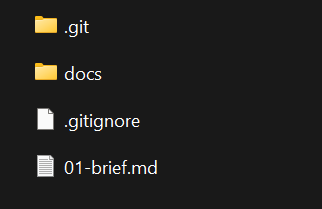
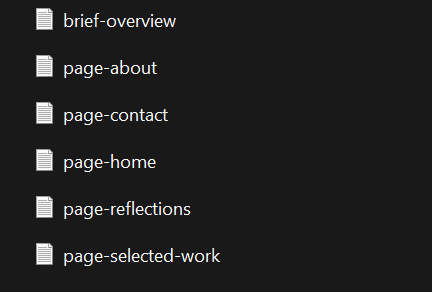
The first version I built in class was functional. But it wasn't the site I had in mind. After several attempts to tweak the design, I eventually went back to the drawing board and rewrote the brief into six separate documents — one for the overall site and one for each major page. Only then did the design and layout come closer to what I had envisioned. The rest was refinement.
Then came the technical hiccups.
At one point, I found myself locked out of the terminal entirely:


It seemed like a simple issue. I didn't want to bother others, so I tried to troubleshoot it myself by asking Claude. It assumed I was on macOS and suggested a fix:
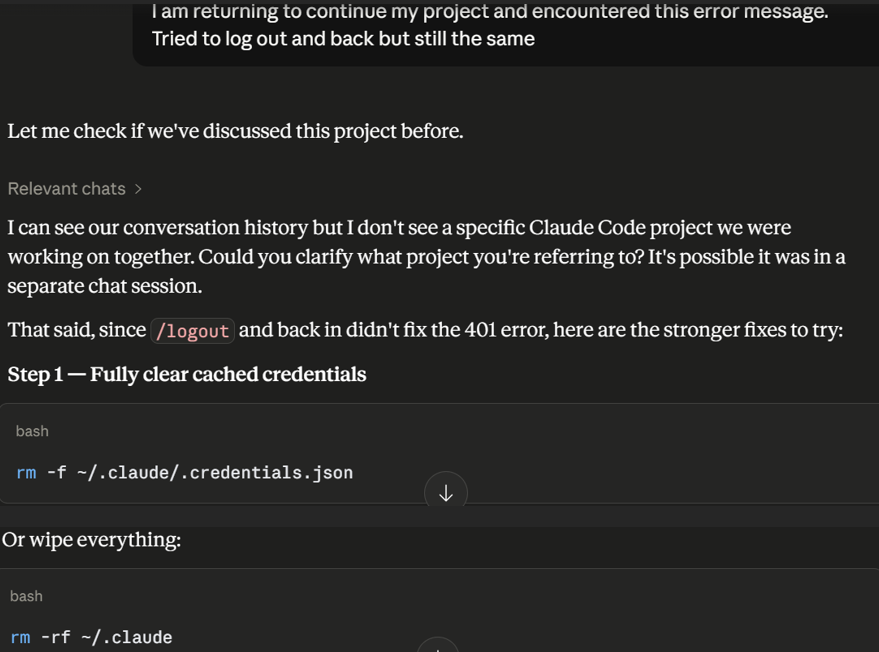
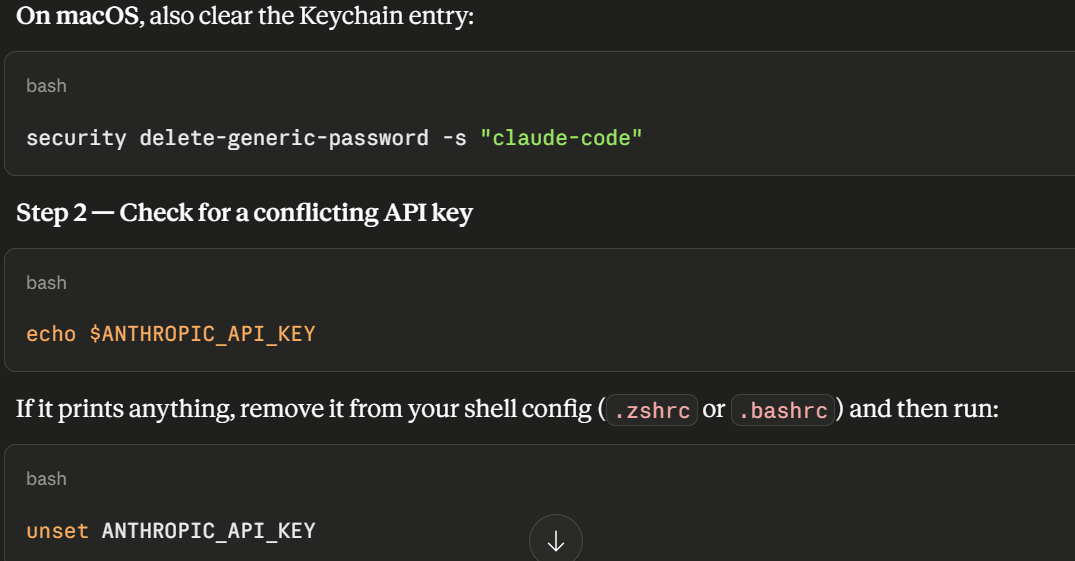
When I clarified I was on Windows, it gave a different fix:
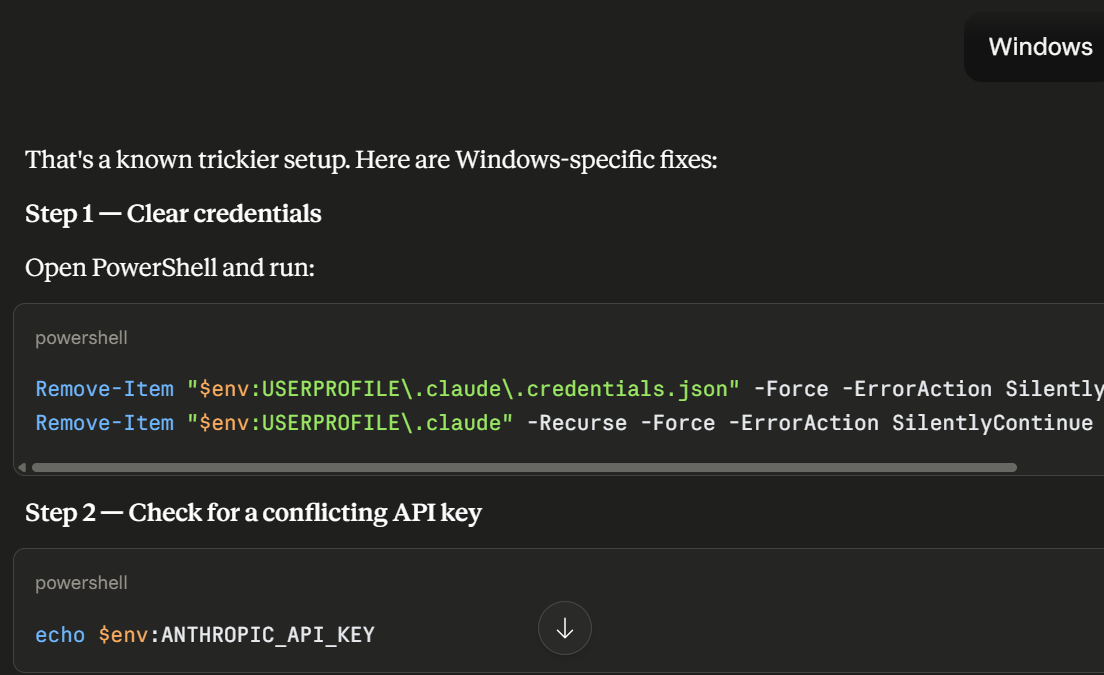
Intuitively it didn't feel right either. That was when I decided to check in with the builders' community I was part of. I had an answer within minutes.
That experience taught me two things.
First, AI is a powerful assistant, but it is not a substitute for experience.
Second, if you're learning to build, find a community. You'll need one.
The most valuable support often came not from the model, but from people who had already encountered the mistakes I was making.
Learning to Ask for Help
One of the hardest adjustments was psychological, not technical. I am used to being competent. Building this website forced me into situations where I had no choice but to ask for help repeatedly — from AI, tutorials, forums, and fellow builders in the community.
Over time, the discomfort of not knowing lessened. What replaced it was a genuine habit of asking — which turned out to be the more valuable skill.
Learning Differently
I started doing what I now call reverse learning. Instead of copying commands and running them blindly, I would paste each one into Claude or ChatGPT and ask: what does this do? What happens if it is missing? What breaks if I run this in the wrong order?
It slowed the build down considerably. But it made the process less frightening. I started doing things I did not understand — not because I suddenly knew everything, but because I gave myself permission to not know everything.
What I realised was that it was not really about trusting AI. It was about trusting my own judgement enough to ask the right questions.
Version 1 Is Better Than Perfect
What struck me was the inconsistency. In my operations work, I was comfortable implementing incomplete processes — fail fast, learn fast, iterate. I never expected a new process or an org change to be perfect on day one.
But a website? Everything had to be right before anyone could see it.
I had applied a different standard to a physical product than I would to any other kind of change. The principle was the same. I just had not extended it here yet.
I had been told early on: ship it, then improve it. I understood that in principle. What the build taught me was the gap between understanding something and being ready to do it.
What This Experience Changed
Before this, I viewed technology mostly from an operational and strategic lens. Now, after sitting inside the messiness of building — even imperfectly — I understand much more clearly why builders think differently.
Not because I built a website. But because I allowed myself to become a beginner again.
Still Building
The website is still evolving. So am I. And perhaps that is the point of TiP — Transformation in Practice.
With thanks to Boon Kgim for the guidance, patience, and generosity that made this build possible.